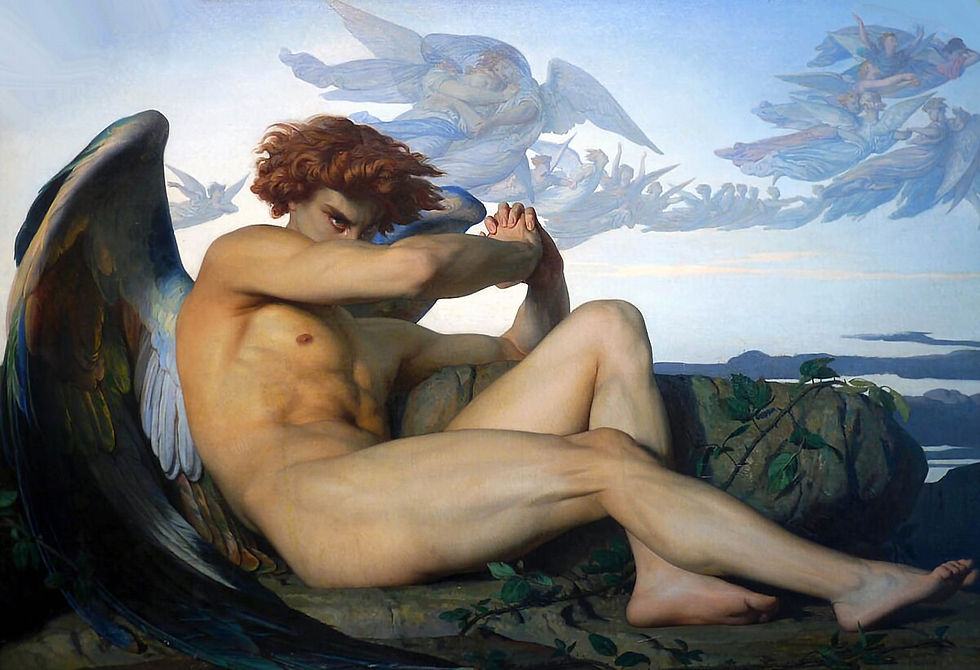
"The Fallen Angel" is an oil on canvas painting by Alexandre Cabanel, created in 1847 when he was 24 years old.
The work depicts Lucifer immediately after his expulsion from Heaven, shown as a nude, muscular young man reclining on the ground with hands clasped and tears in his eyes, his face partially obscured by his arm. His wings blend white, blue, and gold near the body but darken to navy primaries, while a thorny vine trails behind his legs amid a stormy sky filled with flying angels. Cabanel's Romantic style draws from classical Greek sculpture, emphasizing idealized anatomy, dramatic chiaroscuro lighting, and emotional intensity through furrowed brows and a downturned mouth.
Broken wings symbolize the loss of divine power and fall from grace, with the barren landscape and ominous sky evoking desolation, divine wrath, and Lucifer's wounded pride mixed with sorrow. The painting humanizes the Devil not as monstrous but as a beautiful, tragic figure of rebellion, blending beauty with pain to provoke empathy and reflection on pride and punishment. This provocative portrayal captures the moment resentment births defiance, making it iconic for its evocative gaze and emotional depth.